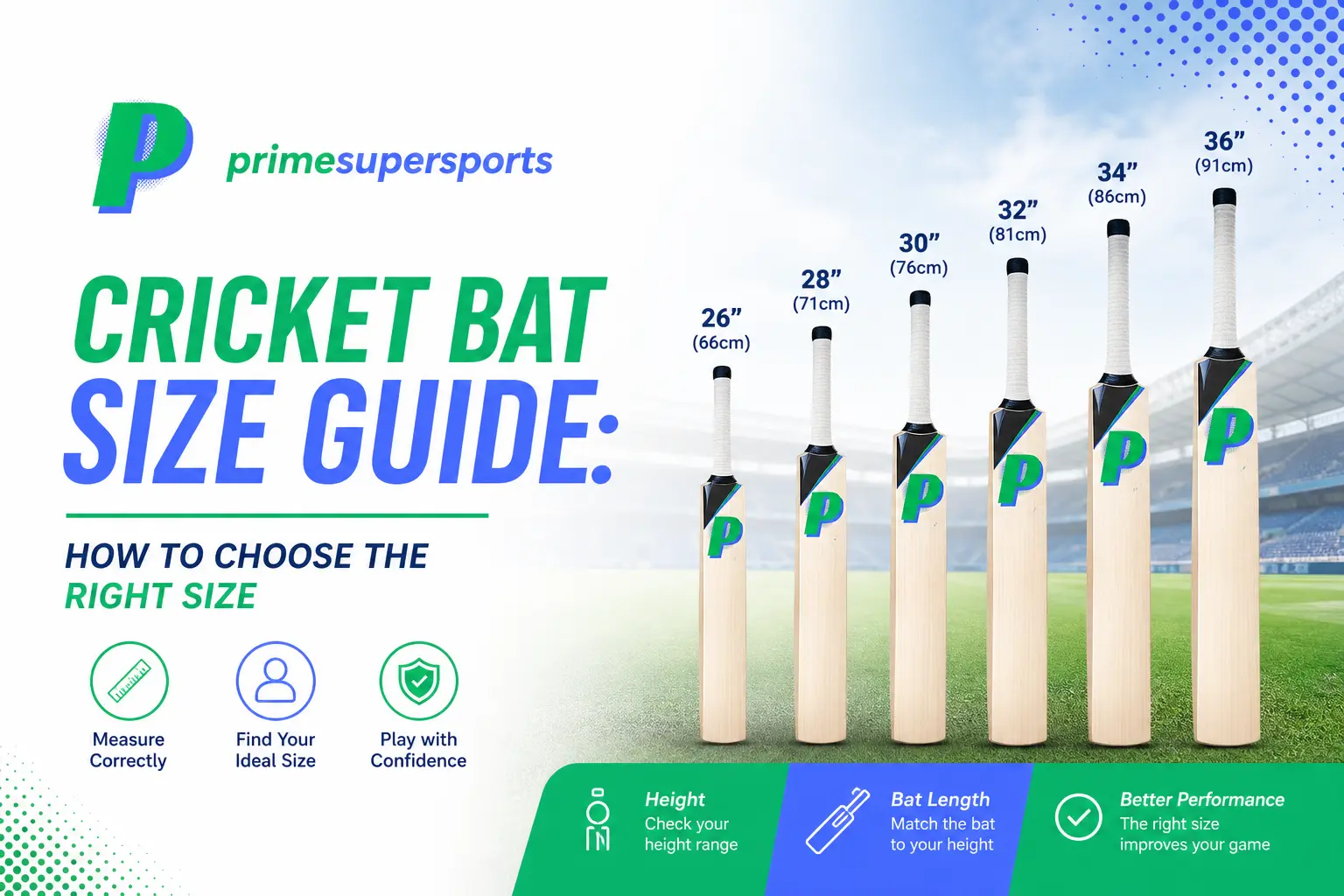
Introduction
Choosing the right cricket bat size is one of the most important decisions for any cricketer, especially for juniors and beginners. A bat that is too large or too heavy can make it difficult to control the shot, while one that is too small may limit comfort and performance.
Cricket bats are available in different sizes to suit players of different ages and heights. From junior sizes such as Size 0 and Size 1 to full-size adult bats, understanding the differences can help you choose a bat that feels comfortable and allows you to play naturally.
This Cricket Bat Size Guide explains cricket bat sizes, recommended player heights and ages, junior bat options, Harrow bats, full-size bats, and how to check whether a bat is the right fit for you.
Looking for your first bat? Also read our guide to the Best Cricket Bat for Beginners for help choosing the right bat after determining the appropriate size.
Why Choosing the Right Cricket Bat Size Matters

A cricket bat should allow you to control your shots without making you work unnecessarily hard.
The correct size can help with:
- Better bat control
- More comfortable stance
- Easier shot execution
- Improved balance
- Better footwork
- More confidence while batting
- Reduced difficulty when learning technique
For younger players, choosing an appropriately sized bat is particularly important.
A junior cricketer using an adult-sized bat may struggle to control the bat during backlift, downswing, and follow-through.
The goal isn’t to choose the biggest bat possible.
The goal is to choose a bat that the player can comfortably control.
Cricket Bat Size Chart
Cricket bat sizing generally progresses from small junior bats to full-size adult bats.
| Bat Size | Recommended Height | Approx. Age |
|---|---|---|
| Size 0 | Up to 4′ | 4–5 years |
| Size 1 | 4’–4’3″ | 4–6 years |
| Size 2 | 4’3″–4’6″ | 6–8 years |
| Size 3 | 4’6″–4’9″ | 8–10 years |
| Size 4 | 4’9″–4’11” | 9–11 years |
| Size 5 | 4’11″–5’2″ | 10–12 years |
| Size 6 | 5’2″–5’4″ | 11–13 years |
| Harrow | 5’4″–5’7″ | 12–14 years |
| Full Size | 5’7″+ | 14+ years |
These measurements are useful starting points rather than absolute rules. Manufacturers can have slightly different sizing recommendations, so always check the specific bat’s sizing information before purchasing.
Cricket Bat Sizes by Age
Age can help narrow down your options, but height is generally more useful than age alone.
Two players of the same age can have significantly different heights and physical development.
For example, a 12-year-old player may be ready for a Size 6 bat, while another player of the same age may be more comfortable with a smaller size.
That’s why the player’s height, reach, strength, and ability to control the bat should all be considered.
Young Beginners
Very young players usually need the smallest junior bats.
Size 0 and Size 1 bats can be suitable for younger children who are just beginning to learn basic batting skills.
Developing Junior Players
As players grow, they can move through Size 2, Size 3, Size 4, Size 5, and Size 6 bats.
The correct transition should be based on the player’s physical development rather than simply moving to the next size every year.
Older Juniors
Older junior players may eventually move to a Harrow bat before progressing to a full-size adult bat.
This transition can help players become comfortable with a larger bat without immediately jumping from a junior model to a full-size adult bat.
Cricket Bat Sizes by Height
Height is one of the most practical ways to estimate the appropriate cricket bat size.
A general progression looks like this:
- Under 4 feet: Size 0
- 4’–4’3″: Size 1
- 4’3″–4’6″: Size 2
- 4’6″–4’9″: Size 3
- 4’9″–4’11”: Size 4
- 4’11″–5’2″: Size 5
- 5’2″–5’4″: Size 6
- 5’4″–5’7″: Harrow
- 5’7″+: Full Size
These ranges are approximate.
If a player falls close to the boundary between two sizes, try both where possible and choose the one that offers better control and comfort.
What Is a Size 0 Cricket Bat?
A Size 0 cricket bat is designed for some of the youngest players.
It is shorter and lighter than larger junior bats, making it easier for small children to control.
Size 0 bats can be useful for introducing young players to basic batting movements without giving them a bat that is unnecessarily large.
What Is a Size 1 Cricket Bat?
A Size 1 bat is another junior option designed for young players.
It provides a step up from the smallest bat sizes while remaining manageable for children with shorter height and reach.
Parents should still check the child’s actual height rather than choosing Size 1 purely based on age.
What Is a Size 2 Cricket Bat?
Size 2 bats are designed for growing junior players.
They are larger than Size 1 bats but remain considerably more manageable than adult bats.
A properly sized Size 2 bat can allow young players to develop their batting technique without struggling with excessive length or weight.
What Is a Size 3 Cricket Bat?
Size 3 is another junior cricket bat option for taller or older children.
At this stage, players may already be developing more advanced batting skills and playing organized cricket.
The bat should still feel easy to control.
If the player struggles to lift the bat into position comfortably, moving to a larger size may be premature.
What Is a Size 4 Cricket Bat?
Size 4 bats are designed for developing junior players who have grown beyond the smaller junior sizes.
They provide additional length while remaining shorter than larger junior and adult bats.
A Size 4 can be suitable for players around the upper junior height range, depending on the manufacturer’s recommendations.
What Is a Size 5 Cricket Bat?
Size 5 bats are intended for taller junior players.
At this stage, players may be developing greater strength and batting experience.
However, the bat still needs to be manageable.
Don’t choose a Size 5 simply because it looks more like an adult bat. The player should be able to control the bat naturally.
What Is a Size 6 Cricket Bat?
Size 6 is one of the larger junior cricket bat sizes.
It can suit taller juniors who aren’t quite ready for a Harrow or full-size bat.
For players around the Size 6 height range, checking both the bat’s dimensions and weight is particularly important because different models can feel very different even when they share the same size designation.
What Is a Harrow Cricket Bat?
A Harrow cricket bat sits between traditional junior sizes and a full-size adult bat.
It is commonly used by older junior players who are growing into a larger bat but may not yet have the height or strength required to comfortably control a full-size model.
The Harrow size can be particularly useful during the transition from junior cricket equipment to adult equipment.
What Is a Full-Size Cricket Bat?
A full-size cricket bat is generally designed for older teenagers and adults.
It is longer and larger than junior bats and is intended for players who have developed the height, reach, and strength required to control it.
However, “full size” doesn’t mean every full-size bat feels identical.
Weight, pickup, blade profile, handle design, and balance can all affect how the bat feels.
How to Check if a Cricket Bat Fits You
Knowing the recommended size is helpful, but physically checking the bat can provide an even better indication.
Stand naturally with the bat beside your leg.
The bat should be manageable without feeling excessively long or awkward.
You should also be able to:
- Hold the bat comfortably.
- Lift it without excessive effort.
- Move it into your batting stance naturally.
- Control the backlift.
- Practice basic shots without struggling.
- Maintain balance while using it.
If a player has difficulty controlling the bat during simple movements, the bat may be too large or heavy.
Cricket Bat Size vs Bat Weight
Size and weight are related, but they aren’t the same thing.
Two bats with the same size can have different weights and different pickup characteristics.
For example, one bat may feel easier to lift because its weight is distributed differently.
When choosing a bat, consider:
Size + Weight + Pickup + Balance
rather than looking at the size number alone.
Why Bat Weight Matters
A bat that is too heavy can make it difficult to:
- Control the backlift
- Play quick shots
- Adjust to different deliveries
- Maintain timing
- Bat for longer periods
A lighter bat isn’t automatically better either.
The right weight depends on the player’s strength, technique, preferences, and playing level.
How to Choose the Right Cricket Bat for a Junior Player
Parents often focus heavily on age when purchasing cricket equipment.
Instead, use a combination of factors.
Step 1: Measure the Player’s Height
Height provides a useful starting point for determining the appropriate size.
Step 2: Check the Recommended Size
Compare the player’s height with the manufacturer’s cricket bat size chart.
Step 3: Consider Strength and Experience
A physically stronger player may handle a particular bat differently from another player of the same height.
Step 4: Check the Weight
Don’t select a bat solely because the length is correct.
Make sure the player can comfortably control its weight.
Step 5: Test the Pickup
If possible, let the player hold and lift the bat.
The bat should feel balanced rather than difficult to maneuver.
Step 6: Consider Future Growth Carefully
It’s tempting to buy a larger bat so that a child can “grow into it.”
However, buying significantly too large a bat can make batting more difficult right now.
A properly fitted bat is generally more useful than one selected purely for future growth.
Common Cricket Bat Size Mistakes
Choosing Based Only on Age
Age is useful, but children grow at different rates.
Use height and physical ability as additional considerations.
Buying an Adult Bat Too Early
A full-size bat can be difficult for a junior player to control.
Don’t move up simply because the player wants an adult-looking bat.
Ignoring Bat Weight
A correctly sized bat can still be unsuitable if it is too heavy for the player.
Buying for Future Growth
A bat that’s significantly oversized may negatively affect control and technique.
Assuming Every Brand Sizes Identically
Sizing standards can vary slightly between manufacturers and models.
Always check the manufacturer’s own specifications.
Choosing Appearance Over Fit
A player’s favorite colors or design can be part of the decision, but fit and control should come first.
When Should a Child Move to the Next Cricket Bat Size?
There isn’t one specific age at which every player should move to the next size.
Consider moving up when:
- The current bat feels noticeably too short.
- The player’s height has increased significantly.
- The player can comfortably handle a larger size.
- Their coach recommends moving up.
- Their current bat restricts natural movement.
Don’t rush the transition.
If the current bat still provides good control and comfort, there may be no need to move up immediately.
Can a Smaller Cricket Bat Improve Control?
For some developing players, yes.
A smaller and lighter bat can make it easier to learn fundamental batting movements.
However, the objective isn’t to use the smallest possible bat.
The objective is to find a size that allows the player to maintain good technique while developing strength and coordination.
How Cricket Bat Size Affects Batting Technique
Bat size can influence how easily a player performs basic batting movements.
An oversized bat may make it harder to:
- Maintain a comfortable stance
- Control the backlift
- Play shots close to the body
- Adjust quickly
- Maintain balance
A properly sized bat allows the player to focus more on technique instead of fighting the equipment.
This is particularly important for beginners who are still learning their stance, grip, backlift, footwork, and shot selection.
Cricket Bat Size Checklist
Before buying a cricket bat, check:
- Player’s height
- Recommended bat size
- Player’s age
- Bat weight
- Overall balance
- Pickup
- Grip comfort
- Player’s strength
- Playing level
- Manufacturer sizing recommendations
- Coach’s recommendation where applicable
Frequently Asked Questions
What size cricket bat should I use?
The correct size depends primarily on your height, age, physical development, and ability to control the bat. Use a cricket bat size chart as a starting point and check the manufacturer’s recommendations.
What cricket bat size is suitable for a 10-year-old?
A 10-year-old may commonly use a Size 4 or Size 5 bat, but age alone isn’t enough to determine the correct size. Height and physical development should also be considered.
What size cricket bat is suitable for a 12-year-old?
A 12-year-old may commonly use a Size 5, Size 6, or potentially a Harrow bat depending on height and physical development.
What size cricket bat is suitable for adults?
Most adult players use a full-size cricket bat, but the appropriate weight and bat profile can vary considerably between players.
What is a Harrow cricket bat?
A Harrow cricket bat is an intermediate size commonly used by older junior players transitioning toward full-size adult bats.
Is a heavier cricket bat better?
Not necessarily. A heavier bat can provide benefits for some experienced players, but beginners and younger players need a bat they can control comfortably.
Should children use adult cricket bats?
Children generally shouldn’t use a full-size adult bat simply because it may last longer. The bat should be appropriate for their height, strength, and ability to control it.
Is bat size more important than bat weight?
Both matter. A bat can have the correct length but still be too heavy for the player. Size, weight, balance, and pickup should all be considered together.
Final Thoughts
Choosing the correct cricket bat size isn’t about buying the biggest bat a player can physically hold.
It’s about finding the right balance between length, weight, control, comfort, and physical development.
For younger players, start with their height and compare it with a reliable size chart. Then consider their strength and ability to control the bat.
Older juniors may eventually move through Size 6 and Harrow before transitioning to a full-size bat.
Most importantly, don’t rush the process.
A bat that fits the player properly can make learning cricket more enjoyable and allow them to concentrate on developing good batting technique rather than struggling with equipment that is too large or heavy.
If you’re choosing a bat for a beginner, determine the correct size first, then compare bat materials, weight, balance, and overall construction to find the best option for the player.