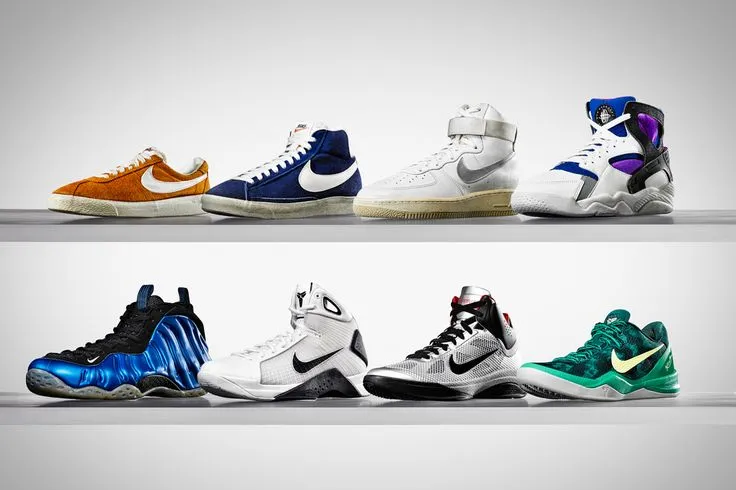
Basketball is not just a game of skill and height; it is a game of friction, support, and explosive movement. When we talk about the evolution of basketball shoes, we aren’t just discussing fashion. We are looking at a century of engineering designed to protect athletes and enhance their vertical leap.
In this modern era, the evolution of basketball shoes has reached a point where sneakers are equipped with carbon fiber plates and energy-returning foams. But where did it all begin?
Evolution of Basketball Shoes: Where It All Started (1920s – 1960s)
When basketball was invented the shoes people wore were plain rubberized soles, and were worn by everyone. Possibly the most unforgettable landmark in the development of basketball shoes was Converse Allstar 1917.
It was not until 1921 that Chuck Taylor joined the company and proposed modifications to improve flexibility and ankle support. For decades high-top canvas shoes ruled but the only problem was the shoes were not padded enough to cushion foot fatigue and injuries.
The Leather Revolution (1970s)
As the game picked up pace and players got heavier than canvas simply would not do. Enter leather 1970‘s- 1 step closer to today‘s shoes.
The Adidas Superstar (1969) revolutionized the game when it introduced the “shell toe,” made of one piece all leather, which gave it great durability. Leather had a much better lateral support than the canvas versions for players making hard cuts and not sliding all around in his shoe. Other brands like Puma, and Pony fueled the ascent of a basketball shoe because of their prominence.
The Jordan Effect: Cultural Explosion (1980s)
If there can be one defining moment in the history of the basketball shoe, it was 1984 the year Nike signed Michael Jordan.
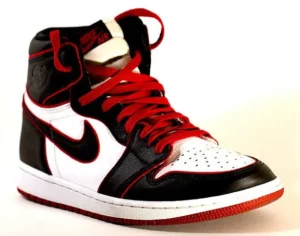
The Air Jordan 1 didn‘t just bring “Air” technology (pressurized gas in a flexible urethane bag), it brought attitude. Prior to this, shoes were pretty bland with most being white. The “Bred” (Black and Red) versions of the Air Jordan 1 line were actually banned by the NBA; a real boon for the market. An era of marketing now focused on “Sneakerhead” culture, rather than cleanliness and functionality.
High-Tech Performance & The “Big Man” Era (1990s)
During the 1990s, basketball shoes entered into a war of technology. Brands started adding over-the-top features:
Nike Air Max: Visible air units that maximize impact protection.
Reebok Pump: How it works. Manual internal inflation system. Pumped up for a custom fit.
Nike Zoom Air: Come thinner, softer. To provide guards with more mobile, more responsive to cushion.
Advantages and disadvantages of the variable shoe structure for different types of players: Players like Shaquille O‘Neal who required a very large, heavy shoe for maximum stability, versus that of Penny Hardaway where the shoe used a sleek foam structure (Foamposite) to model the shape to the foot was required.
Minimalism and Synthetic Materials (2000s – 2010s)
By the time we entered the 2000s, the redesign of sneakers for basketball included moving from heavy leathers to lightweight synthetics and meshes. Kobe Bryant‘s inclusion of the “Low-top” shoes (not inspired by basketball, but football/soccer cleats) overshadowed the myth that basketball players had to wear high-tops to avoid an ankle sprain.
The likes of Nike Flywire and Adidas Boost made shoes lighter than ever allowing the players to feel “closer to the ground” for quicker crossovers.
The Modern Era: Data-Driven Design (2020 – 2026)
Today‘s basketball shoes are evolving via 3D printing and biomechanical data. The simple leather and rubber shoes of today are machines with:
Carbon Fiber Plates: For springy energy returning activity.
Knit Uppers: Offer a sock-like fit requiring no “break-in” time.
Smart Lacing: Shoes such as the Nike Adapt that tighten by means of an app.
Sustainability is a big consideration these days, with a number of the new models built with recycled ocean plastics which don‘t suffer from traction on the court.
Why the Evolution Matters for Your Game
With a knowledge of the development of basketball shoes you‘ll be able to make the best decision.
Impact Protection: Cushlon or Nitro are the modern foams protecting your knees.
Traction: multi-directional herringbone layouts are intended for dusty indoor court surfaces.
Weight- Shoes with lighter weight will have less of ‘drag’ in the fourth quarter.
Frequently Asked Questions (FAQs)
1. What was the first-ever basketball shoe?
The first real basketball shoe was the Converse All-Star, introduced in 1917. This changed to the ‘Chuck Taylor’ after the name of the player who improved its support and flexibility.
2. How has the weight of basketball shoes changed over time?
The weight of basketball shoes has been reduced tremendously over recent years. In the past an early leather sneaker was generally in the 15–20oz range, whereas a present day, performance, sneaker made out of synthetic mesh and carbon fiber can range from 10–13oz, making you quicker.
3. Do high-top shoes actually prevent ankle injuries?
High-tops for overall ankle saftey; however, research (current and older) along with the introduction of low-tops (by Kobe Bryant) have proven that low-tops work just as good if not better so long as the shoe has a functioning “outrigger” and lockdown, so allow a more naturall movement of the foot.
4. What is the most famous shoe in the history of basketball?
One can argue that the most popular shoe ever created is the Air Jordan 1. The Jordan 1 was the catalyst for the progress of sports footwear by integrating sport and street culture.
5. How often should I replace my basketball shoes?
Active tennis players should rotate shoes every 3 to 6 months. Though to the eye the shoe may appear fine, the Deaton Energy return and impact cushion of the insole (Zoom Air, Boost, etc.) will diminish with age.
Conclusion
To understand today’s basketball shoes is to truly understand the history of a sport. From canvas to space-age technology, basketball shoes have come a long way. As the sport has grown to be faster, more athletically demanding and well known around the world, so too have basketball shoes. Whether you’re a casual observer or a professional athlete, the shoes on your feet have been through 100 years of trial and error.
With technology progresses, the evolution of Nike Hyperdunk 2010 we are about to enter might be the introduction of an AI-customized sole designed for the shape of a player’s foot and their jumping movement.