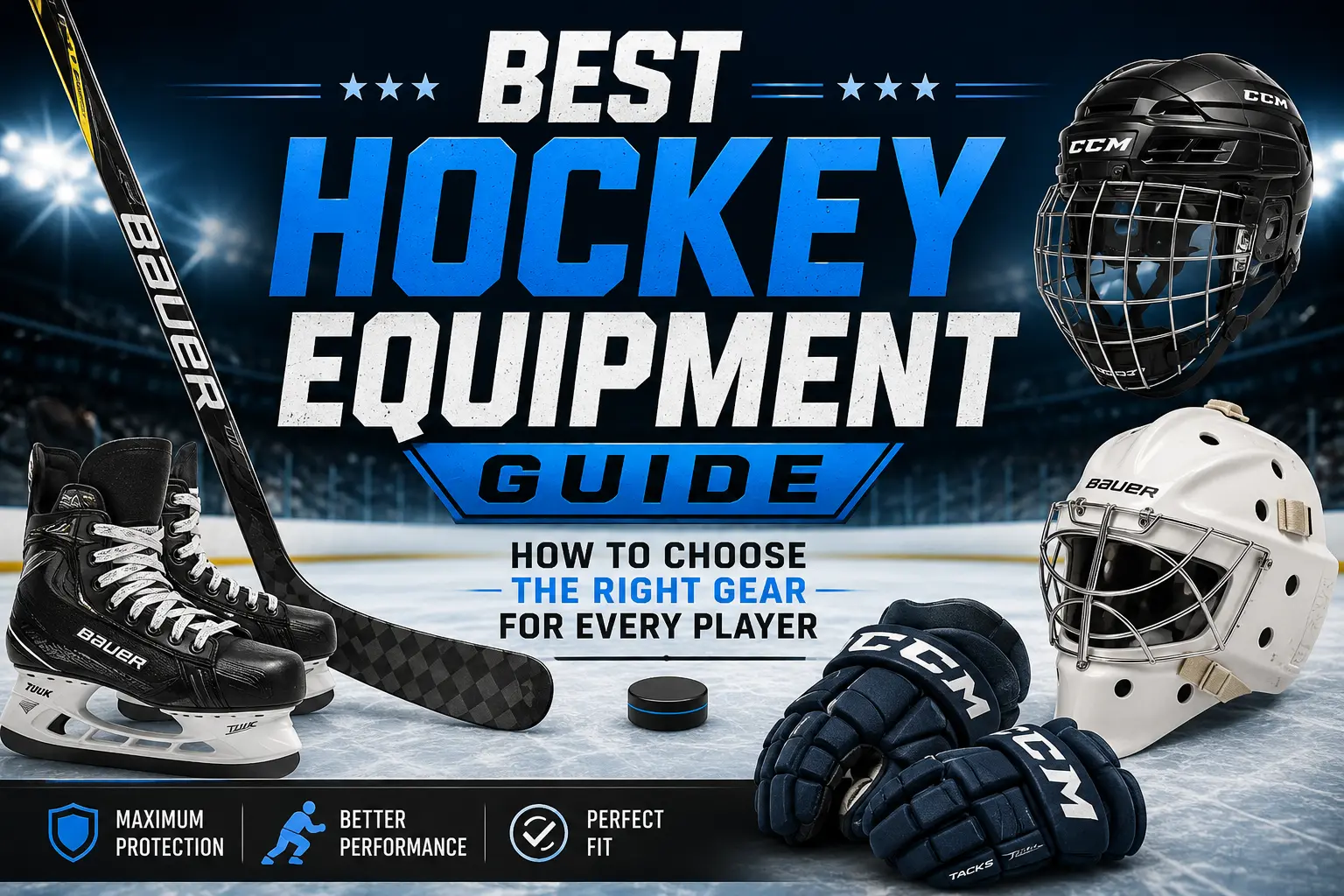
Whether you’re stepping onto the ice for the first time or upgrading your current gear, choosing the right hockey equipment is one of the most important decisions you’ll make as a player. The right gear doesn’t just improve your performance—it also enhances comfort, increases confidence, and most importantly, keeps you protected throughout the game.
With hundreds of products available from leading brands, finding the best hockey equipment can quickly become overwhelming. From selecting the best hockey sticks for better puck control to choosing best hockey skates for speed and stability, every piece of equipment plays a unique role in your overall performance. Safety gear is equally important, making the best hockey helmet and best hockey goalie masks essential investments for players at every level.
Many beginners make the mistake of buying equipment based solely on price or brand reputation. However, the best hockey gear depends on several factors, including your skill level, playing position, age, budget, and how frequently you play. A professional player and a beginner require different levels of protection, flexibility, and durability.
This complete Best Hockey Equipment Guide will help you understand the purpose of each essential piece of hockey gear and teach you how to choose equipment that fits your needs. Whether you’re building your first hockey kit or replacing older equipment, this guide will help you make smarter buying decisions while getting the best value for your investment.
Why Choosing the Right Hockey Equipment Matters
Hockey is one of the fastest and most physically demanding sports in the world. Players constantly skate at high speeds, make quick directional changes, and engage in physical contact. Wearing poor-quality or poorly fitted equipment can reduce your performance and significantly increase the risk of injury.
Quality hockey equipment provides several important benefits:
- Better comfort during long training sessions and matches.
- Improved mobility and skating performance.
- Increased protection against impacts, sticks, and pucks.
- Greater durability, reducing replacement costs over time.
- Enhanced confidence while playing competitive games.
Instead of viewing hockey equipment as an expense, think of it as an investment in your performance and safety.
Essential Hockey Equipment Every Player Needs
A complete hockey setup consists of multiple pieces of equipment, each designed to perform a specific function. Understanding the purpose of every item will make choosing the right products much easier.
The four most important pieces of hockey equipment include:
- Best Hockey Sticks for shooting, passing, and puck control.
- Best Hockey Skates for speed, balance, and agility.
- Best Hockey Helmet for head protection.
- Best Hockey Goalie Masks for maximum facial and head safety during goalkeeping.
Each of these items should be selected carefully based on your playing style and position rather than simply choosing the most expensive option.
Best Hockey Sticks: The Foundation of Every Player’s Game
Your hockey stick is arguably the most important piece of equipment you’ll own. It directly affects your passing, shooting accuracy, puck handling, and overall confidence on the ice.
Modern hockey sticks are available in several materials, including wood, fiberglass, composite, and carbon fiber. While wooden sticks remain affordable for beginners, composite hockey sticks dominate today’s game because they’re lightweight, durable, and deliver excellent shot power.
When selecting one of the best hockey sticks, consider these factors:
Stick Length
A properly sized stick improves control and shooting accuracy. Standing in skates, the stick should generally reach somewhere between your chin and nose.
Stick Flex
Flex measures how much the stick bends during a shot.
- Lower flex = easier shots and quicker release.
- Higher flex = more power for stronger players.
Choosing the correct flex helps maximize both accuracy and shot power.
Blade Curve
Different blade patterns influence puck handling and shooting style. Beginners often benefit from a moderate curve because it offers balanced control and accuracy.
A high-quality hockey stick can instantly improve your overall performance, making it one of the smartest investments for players of every skill level.
Best Hockey Skates: Speed, Comfort, and Control
After choosing a quality hockey stick, your next priority should be selecting the best hockey skates. Your skates directly impact your speed, balance, acceleration, and overall performance on the ice. Even the most skilled player can struggle if their skates don’t fit properly.
Modern hockey skates are available in different designs for beginners, intermediate players, and professionals. While premium skates offer advanced support and lightweight materials, entry-level models focus on comfort and durability.
When shopping for the best hockey skates, consider these key factors:
Proper Fit
A hockey skate should fit snugly without causing pain. Loose skates reduce stability, while overly tight skates can cause discomfort and limit circulation. Your heel should stay firmly in place, and your toes should lightly touch the front of the boot.
Boot Construction
High-quality skates use lightweight composite materials that provide better ankle support and transfer more power with each stride. Beginners can also choose reinforced synthetic boots that offer durability at a lower price.
Blade Quality
The steel runner is just as important as the boot itself. Premium stainless steel blades stay sharper longer, improve glide, and require less maintenance than cheaper alternatives.
Comfort and Support
Well-padded ankle collars and moisture-wicking liners increase comfort during long training sessions. Proper ankle support also helps reduce fatigue and lowers the risk of injuries.
Choosing the right pair of hockey skates allows players to skate faster, stop more confidently, and maintain better control throughout the game.
Best Hockey Helmet: Your Most Important Safety Equipment
No piece of equipment is more important than a properly fitted best hockey helmet. Hockey is a fast-paced contact sport where collisions, falls, sticks, and flying pucks are common. Wearing a certified helmet significantly reduces the risk of serious head injuries.
A quality helmet should never feel loose or move while skating. Instead, it should fit securely around your head while remaining comfortable enough for extended use.
Features to Look For
When comparing hockey helmets, prioritize the following:
- Certified safety standards
- Adjustable fit system
- Multi-density impact foam
- Excellent ventilation
- Lightweight construction
Modern helmets are designed to absorb impacts from multiple angles while maintaining comfort throughout the game.
Why Helmet Fit Matters
Even the most expensive helmet cannot provide proper protection if it doesn’t fit correctly. A poorly fitted helmet may shift during collisions, leaving parts of the head exposed.
Always measure your head circumference and follow the manufacturer’s sizing guide before purchasing a helmet.
Investing in one of the best hockey helmets gives players confidence to focus on their performance while minimizing injury risks.
Best Hockey Goalie Masks: Maximum Protection for Goalkeepers
Goalkeepers face some of the hardest shots in hockey, making facial and head protection absolutely essential. Unlike standard player helmets, best hockey goalie masks are specifically engineered to withstand repeated high-speed puck impacts.
Modern goalie masks combine lightweight construction with advanced impact-resistant materials to provide outstanding protection without limiting visibility.
What Makes a Great Goalie Mask?
Several features separate premium goalie masks from entry-level models.
Strong Outer Shell
Fiberglass, carbon fiber, and composite shells provide excellent impact resistance while keeping the mask lightweight.
High-Quality Cage
A durable stainless steel cage offers a clear field of vision while protecting the face from sticks and fast-moving pucks.
Comfortable Interior Padding
Multi-layer foam padding absorbs impact energy and ensures a secure, comfortable fit throughout the game.
Proper Fit
A goalie mask should remain stable during movement without creating pressure points. Adjustable straps help achieve the perfect fit for players of different ages.
Because goalkeepers experience the highest number of direct impacts, choosing one of the best hockey goalie masks should always be a top priority rather than an area to cut costs.
Hockey Equipment Comparison
Choosing the right equipment becomes much easier when you understand the purpose of each item.
| Equipment | Primary Purpose | Best For |
| Best Hockey Sticks | Shooting, passing, puck control | All players |
| Best Hockey Skates | Speed, balance, mobility | Every skating player |
| Best Hockey Helmet | Head protection | Every player |
| Best Hockey Goalie Masks | Face and head protection | Goalkeepers |
Each piece of equipment serves a different purpose, but together they create a complete setup that improves both performance and safety.
Buying Tips Before You Invest
Before purchasing hockey equipment, keep these expert tips in mind:
- Buy equipment based on your skill level rather than simply choosing the most expensive option.
- Always prioritize proper fit over brand names.
- Replace damaged safety equipment immediately.
- Look for certified protective gear from trusted manufacturers.
- Consider long-term durability instead of focusing only on the initial purchase price.
- Test the fit whenever possible before making a final decision.
Spending a little more on high-quality equipment often saves money in the long run because premium gear lasts longer and performs more consistently.
How to Maintain Your Hockey Equipment
Buying high-quality hockey gear is only the first step. Proper maintenance helps your equipment last longer, perform better, and keep you safe throughout every season. Whether you’ve invested in the best hockey sticks, best hockey skates, best hockey helmet, or best hockey goalie masks, regular care protects your investment.
Here are a few simple maintenance tips every hockey player should follow:
Clean Your Equipment After Every Game
Sweat, moisture, and dirt can quickly damage hockey equipment and create unpleasant odors. Wipe your stick, helmet, and skates with a clean cloth after every practice or match, and allow protective gear to air dry completely before storing it.
Sharpen Your Skate Blades Regularly
One of the most overlooked maintenance tasks is blade sharpening. Sharp blades improve grip, balance, and control on the ice, while dull blades reduce performance and increase the risk of slipping.
Inspect Your Hockey Stick
Before every game, check your hockey stick for cracks, chips, or damage. Even small fractures can weaken the stick and affect shooting accuracy or cause it to break during play.
Store Equipment Properly
Keep all hockey gear in a cool, dry place away from direct sunlight. Excessive heat and moisture can weaken protective foam, damage composite materials, and shorten the lifespan of your equipment.
Replace Damaged Safety Gear
Helmets and goalie masks are designed to absorb impacts. If your helmet or goalie mask suffers a major hit or develops visible damage, replace it immediately instead of continuing to use compromised equipment.
Proper maintenance not only extends the life of your equipment but also ensures consistent performance every time you step onto the ice.
Frequently Asked Questions (FAQs)
1. What is the most important piece of hockey equipment?
Every piece of equipment plays an important role, but a properly fitted hockey helmet is essential because it protects your head from serious injuries. For goalkeepers, a certified goalie mask is equally important.
2. How do I choose the best hockey stick?
Select a hockey stick based on your height, playing style, stick flex, blade curve, and preferred material. Composite sticks are popular because they offer an excellent balance of durability, lightweight performance, and shot accuracy.
3. How often should hockey skate blades be sharpened?
Most recreational players should sharpen their blades after 15–20 hours of ice time. Competitive players may sharpen them more frequently to maintain maximum grip and performance.
4. How long does hockey equipment last?
With proper care, quality hockey equipment can last several seasons. However, helmets and goalie masks should be replaced immediately if they experience significant impact damage or show signs of wear.
5. Should beginners buy expensive hockey equipment?
Not necessarily. Beginners should focus on equipment that offers the right fit, comfort, and safety. As skills improve, upgrading to premium gear becomes a worthwhile investment.
6. Is expensive hockey equipment worth it?
Premium equipment often uses lighter materials, advanced safety technology, and better construction. Players who train regularly or compete at higher levels usually benefit from investing in higher-quality gear.
Final Verdict
Choosing the right hockey equipment is one of the best investments any player can make. From selecting the best hockey sticks for better puck control to finding best hockey skates that improve speed and stability, every piece of equipment contributes to your performance on the ice.
Safety should always remain your top priority. A properly fitted best hockey helmet protects against head injuries, while best hockey goalie masks provide maximum protection for goalkeepers facing high-speed shots.
Rather than buying equipment based solely on price or brand, focus on quality, fit, durability, and your individual playing needs. The right hockey gear not only enhances your performance but also keeps you comfortable and protected throughout every game and practice session.
Whether you’re just starting your hockey journey or upgrading your existing gear, following this guide will help you make informed decisions and build a complete hockey equipment setup that supports your success for years to come.