Introduction
Starting rugby is an exciting experience, but stepping onto the field with the right equipment is just as important as learning the rules of the game. Whether you’re joining a local club, playing for your school, or simply practicing with friends, having the proper gear helps you stay safe, perform better, and enjoy the sport with confidence.
Many beginners assume they need expensive professional equipment before they can start playing. In reality, you only need a few essential items to begin your rugby journey. As your skills improve, you can gradually invest in additional gear based on your position, playing style, and level of competition.
This Rugby Equipment Checklist for Beginners covers everything you need before your first training session or match. You’ll learn which items are essential, which are optional, how to choose the right equipment, and common buying mistakes to avoid.
If you’re completely new to the sport, it’s also helpful to understand the fundamentals before purchasing your gear. Check out our complete guide on how to play rugby for beginners (replace with your pillar article URL) to learn the rules, scoring system, positions, and basic skills every new player should know.
By the end of this guide, you’ll know exactly what belongs in your rugby kit bag and how to choose equipment that fits your needs without overspending.
Why the Right Rugby Equipment Matters
Rugby is one of the most physically demanding team sports in the world. Players sprint, tackle, pass, kick, and compete for possession throughout an 80-minute match. Because of this, using the right equipment isn’t just about comfort—it plays an important role in both performance and safety.
The right gear can help you:
- Reduce the risk of common injuries
- Improve grip and stability on different playing surfaces
- Stay comfortable during training and matches
- Build confidence as a beginner
- Comply with your club’s or league’s equipment requirements
While no equipment can completely prevent injuries, properly fitted gear significantly improves your playing experience.
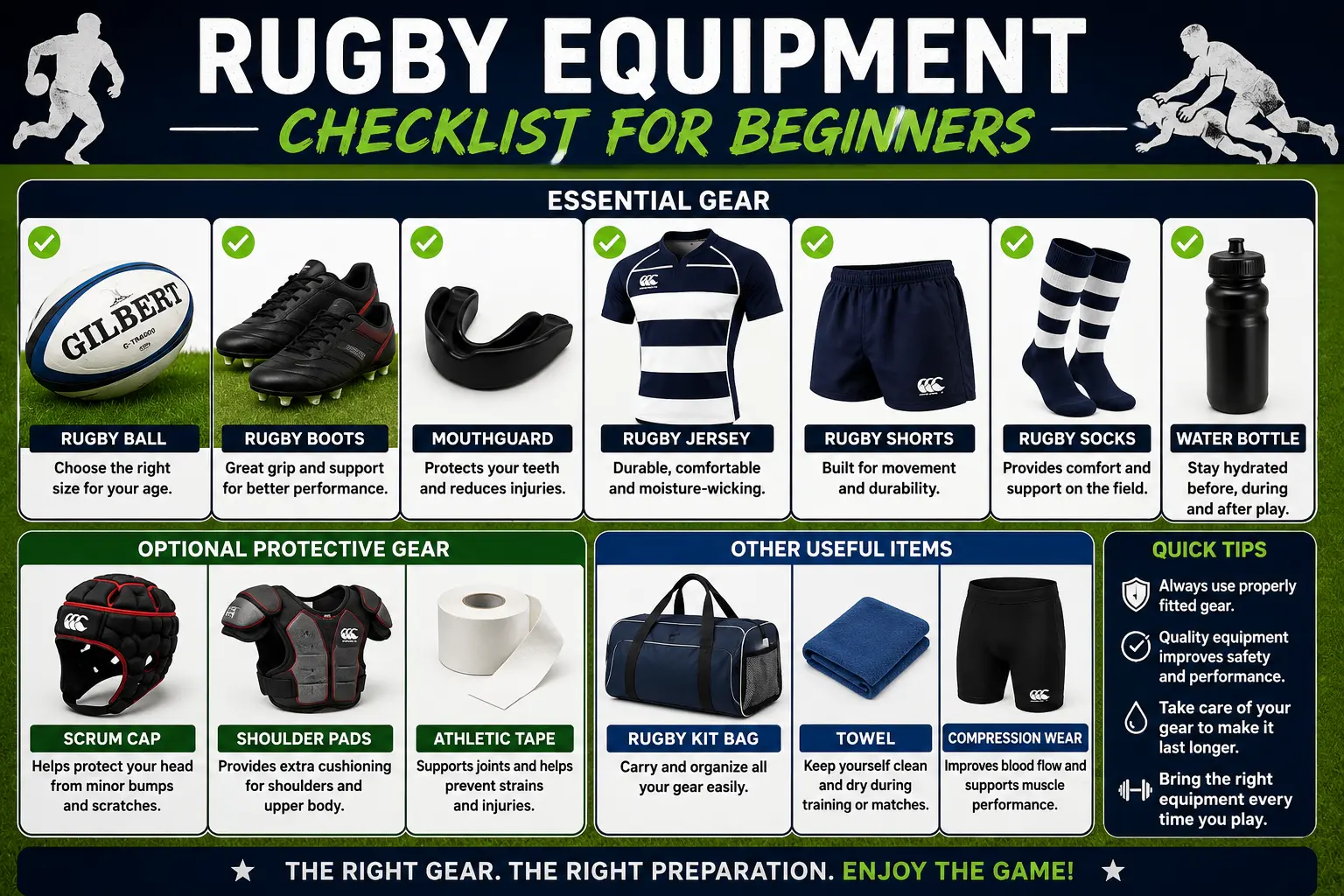
Essential Rugby Equipment Checklist
Before attending your first practice or match, make sure you have these essentials.
✔ Rugby Ball
✔ Rugby Boots
✔ Mouthguard
✔ Rugby Jersey
✔ Rugby Shorts
✔ Rugby Socks
✔ Water Bottle
✔ Training Bag
Some players also choose to wear optional protective gear such as shoulder padding or scrum caps, which we’ll discuss later in this guide
1. Rugby Ball

The rugby ball is, of course, the most important piece of equipment. Unlike a football or soccer ball, a rugby ball has an oval shape, making passing, kicking, and bouncing unique to the sport.
Beginners should spend time practicing with a quality training ball before investing in a premium match ball. A good training ball provides better grip, durability, and control while helping players develop proper passing and catching techniques.
When choosing your first rugby ball, consider:
- Your age group
- Ball size
- Grip quality
- Material
- Durability
- Intended use (training or match play)
Rugby Ball Sizes
| Age Group | Ball Size |
|---|---|
| Under 9 | Size 3 |
| Under 15 | Size 4 |
| Youth & Adults | Size 5 |
Using the correct ball size makes learning basic skills much easier and improves confidence during practice.
If you’re unsure which ball is best for your needs, read our detailed guide on choosing the best rugby ball for beginners (replace with your rugby ball article URL).
2. Rugby Boots

One of the biggest mistakes beginners make is wearing regular running shoes during rugby practice.
Rugby boots are specifically designed to provide traction on grass and soft playing surfaces. Their studs improve grip during scrums, tackles, quick turns, and explosive sprints.
Why Rugby Boots Matter
Good rugby boots help players:
- Maintain balance
- Accelerate more effectively
- Change direction quickly
- Reduce the risk of slipping
- Improve overall confidence on the field
Types of Rugby Boots
There are two common types:
Soft Ground Boots
Best for:
- Wet conditions
- Muddy fields
- Natural grass
These boots usually feature longer removable metal or molded studs for maximum traction.
Firm Ground Boots
Ideal for:
- Dry grass
- Hard natural surfaces
They feature shorter molded studs and are the most common choice for beginners.
Tips for Choosing Rugby Boots
Before buying your first pair:
- Make sure they fit snugly without being uncomfortable.
- Leave a small amount of room for your toes.
- Wear rugby socks when trying them on.
- Avoid buying boots that are too large, as they can reduce stability.
Comfort and proper fit are more important than buying the most expensive model.
3. Mouthguard
A mouthguard is one of the most important pieces of rugby safety equipment.
Even at beginner level, accidental collisions happen frequently. A properly fitted mouthguard helps protect your:
- Teeth
- Jaw
- Lips
- Gums
Many clubs and schools require players to wear one during both training sessions and matches.
Types of Mouthguards
Boil-and-Bite Mouthguards
- Affordable
- Easy to mold at home
- Popular among beginners
Custom-Fitted Mouthguards
- Made by dental professionals
- Superior comfort and protection
- More expensive but ideal for regular players
Never start playing rugby without wearing a properly fitted mouthguard.
4. Rugby Jersey
A rugby jersey is much more durable than a regular sports shirt. It is specifically designed to withstand pulling, tackling, and constant physical contact throughout a match.
Modern rugby jerseys are made from lightweight, moisture-wicking materials that help keep players cool and comfortable during training and games.
What to Look for in a Rugby Jersey
When choosing your first rugby jersey, consider the following:
- Lightweight, breathable fabric
- Reinforced stitching for durability
- Comfortable athletic fit
- Moisture-wicking material
- Easy movement around the shoulders
Avoid wearing loose cotton T-shirts during matches, as they absorb sweat and can restrict movement.
5. Rugby Shorts
Rugby shorts are built differently from standard gym shorts. They are reinforced to handle the demands of scrums, tackles, and repeated stretching without tearing.
A good pair of rugby shorts should provide flexibility while remaining durable enough for regular use.
Features of Quality Rugby Shorts
Look for shorts that offer:
- Strong reinforced seams
- Stretchable fabric
- Comfortable waistband
- Lightweight construction
- Freedom of movement
Your shorts should allow unrestricted running, kicking, and tackling without causing discomfort.
6. Rugby Socks
Rugby socks may seem like a small detail, but they play an important role in comfort and performance.
High-quality rugby socks help:
- Prevent blisters
- Support the calves
- Hold shin supports (if used)
- Improve overall comfort inside rugby boots
Many players keep an extra pair in their kit bag, especially during rainy conditions.
Tips for Choosing Rugby Socks
Choose socks that are:
- Breathable
- Durable
- Moisture-wicking
- Properly fitted
- Thick enough for comfort without being bulky
Optional Rugby Safety Equipment
While the following items are not mandatory in every competition, many beginners choose to wear them for additional confidence and protection.
7. Scrum Cap (Rugby Headgear)
A scrum cap is a soft-padded helmet designed to reduce cuts, abrasions, and minor impacts during play.
It is especially popular among:
- Forwards
- Youth players
- Beginners
- Players involved in frequent contact
What a Scrum Cap Can Do
It may help reduce:
- Ear injuries
- Scalp cuts
- Minor head impacts
- Friction during scrums
What It Cannot Do
A scrum cap does not prevent concussions or eliminate the risk of serious head injuries. Safe playing techniques and following the laws of the game remain the best ways to reduce injury risk.
8. Shoulder Pads
Shoulder pads provide light padding around the shoulders and upper chest.
Unlike American football pads, rugby shoulder pads are thin, flexible, and designed to allow full movement.
Benefits of Shoulder Pads
They may help reduce:
- Bruising
- Minor impacts
- Surface abrasions
However, they are not designed to absorb heavy collisions, so beginners should focus on learning proper tackling technique rather than relying on protective gear.
9. Athletic Tape
Many players carry athletic tape in their kit bag.
It can be useful for:
- Finger support
- Wrist support
- Securing minor bandages
- Preventing blisters
Although not essential for every beginner, athletic tape becomes increasingly useful as training intensity increases.
10. Water Bottle
Hydration is critical in rugby.
Players lose a significant amount of fluid during training and matches, especially in warm weather.
Bring a reusable water bottle and drink regularly:
- Before training
- During breaks
- After matches
Good hydration supports performance and recovery.
11. Rugby Kit Bag

Every player needs a reliable bag to carry equipment.
A rugby kit bag should have enough space for:
- Boots
- Rugby ball
- Jersey
- Shorts
- Socks
- Mouthguard
- Water bottle
- Towel
- First-aid essentials
Look for a durable, water-resistant bag with separate compartments to keep muddy boots away from clean clothing.
Additional Training Accessories
As you progress, these accessories can improve your training experience.
Useful items include:
- Speed ladder
- Agility cones
- Resistance bands
- Foam roller
- Massage ball
- Fitness tracker
- Grip trainer
These tools are optional but can help improve speed, agility, flexibility, and recovery.
Equipment Buying Tips for Beginners
Buying your first rugby kit doesn’t have to be expensive.
Keep these tips in mind:
Buy Quality Essentials First
Prioritize:
- Rugby boots
- Mouthguard
- Rugby ball
You can always upgrade other equipment later.
Choose the Correct Size
Equipment that is too large or too small can reduce comfort and increase the risk of injury.
Always check manufacturer sizing charts before purchasing.
Avoid Cheap, Low-Quality Gear
Budget equipment may save money initially, but it often wears out quickly and provides less comfort and durability.
Investing in reliable gear usually offers better long-term value.
Ask Your Coach for Recommendations
If you’re unsure which equipment to buy, your coach or local rugby club can often recommend suitable options based on your age, position, and playing level.
Build Your Kit Gradually
There’s no need to buy everything at once.
Start with the essentials and add optional gear as your experience grows.
Internal Link Opportunity
Choosing the right equipment is only one part of becoming a better player. Once you have your gear ready, it’s time to learn the fundamentals. Read our complete guide on how to play rugby for beginners (replace with your pillar article URL) to understand the rules, scoring system, player positions, and essential skills before your first match.
Common Rugby Equipment Mistakes Beginners Should Avoid
Buying rugby gear is only the first step. Using the wrong equipment—or using the right equipment incorrectly—can affect your comfort, performance, and safety on the field. Here are some of the most common mistakes new players make and how to avoid them.
1. Buying Boots Based Only on Price
Many beginners purchase the cheapest rugby boots they can find or choose a pair simply because they like the design.
Instead, focus on:
- Proper fit
- Playing surface
- Comfort
- Stud type
- Durability
A well-fitted pair of boots provides better grip and reduces the risk of slipping during matches.
2. Ignoring the Importance of a Mouthguard
Some beginners think a mouthguard is optional, especially during training sessions.
In reality, accidental collisions can happen at any time. Wearing a properly fitted mouthguard helps protect your teeth and jaw and is strongly recommended for both practice and competitive games.
3. Using the Wrong Rugby Ball Size
Using a ball that is too large or too small makes passing, catching, and kicking more difficult.
Always choose the correct size based on your age group and competition level.
If you’re unsure which size is right for you, read our detailed guide on choosing the best rugby ball for beginners (replace with your rugby ball article URL).
4. Forgetting Hydration
Hydration is often overlooked by new players.
Bring a reusable water bottle to every training session and drink water regularly before, during, and after exercise to support performance and recovery.
5. Wearing Worn-Out Equipment
Old boots with damaged studs or worn-out clothing can affect your performance and increase the risk of injury.
Inspect your equipment regularly and replace it when necessary.
How to Take Care of Your Rugby Equipment
Proper maintenance extends the life of your gear and keeps it ready for every training session.
Clean Your Boots After Every Match
Mud and dirt can damage rugby boots over time.
After playing:
- Remove excess mud.
- Wipe them with a damp cloth.
- Allow them to air dry naturally.
- Avoid placing them near direct heat sources, as excessive heat can damage the materials.
Wash Your Clothing Promptly
Rugby jerseys, shorts, and socks absorb sweat and dirt during play.
Follow the care instructions on the label and avoid using high heat when drying to help maintain the fabric’s quality.
Store Your Mouthguard Properly
Always rinse your mouthguard after use and keep it in a ventilated storage case.
Avoid leaving it in direct sunlight or inside a hot car, as high temperatures can cause it to lose its shape.
Check Your Rugby Ball
Regularly inspect your rugby ball for:
- Cuts or cracks
- Air pressure
- Grip condition
- Valve damage
A well-maintained ball performs more consistently during training and matches.
Complete Rugby Equipment Checklist
Before your next practice or game, make sure you have the following essentials:
Essential Equipment
- ✔ Rugby ball
- ✔ Rugby boots
- ✔ Mouthguard
- ✔ Rugby jersey
- ✔ Rugby shorts
- ✔ Rugby socks
- ✔ Water bottle
- ✔ Rugby kit bag
Optional Equipment
- ✔ Scrum cap
- ✔ Shoulder pads
- ✔ Athletic tape
- ✔ Foam roller
- ✔ Resistance bands
- ✔ Agility cones
Keeping this checklist handy helps ensure you’re always prepared for training and match day.
Frequently Asked Questions
What equipment do beginners need for rugby?
Most beginners only need a rugby ball, rugby boots, a mouthguard, a jersey, shorts, socks, and a water bottle. Additional protective gear, such as a scrum cap or shoulder pads, is optional and depends on personal preference and competition rules.
Are shoulder pads required in rugby?
No. Shoulder pads are optional. Some players wear them for extra comfort during contact, but they are not mandatory in most competitions.
Can I wear football boots for rugby?
Some football boots may be suitable depending on local competition rules and the type of studs they use. However, boots designed specifically for rugby generally provide better support and traction for the physical demands of the game.
Is a scrum cap necessary?
A scrum cap is optional. It may help reduce cuts and abrasions but is not designed to prevent concussions.
What size rugby ball should beginners use?
The correct size depends on the player’s age:
- Size 3: Younger children
- Size 4: Junior and youth players
- Size 5: Older teenagers and adults
Using the correct ball size makes it easier to develop proper passing and catching techniques.
How much should I spend on beginner rugby equipment?
You don’t need the most expensive gear to get started. Focus on buying quality essentials that fit well and meet your playing needs. As you gain experience, you can upgrade individual items over time.
Final Thoughts
Having the right rugby equipment for beginners is one of the best ways to start your rugby journey with confidence. While skill, teamwork, and regular practice are the keys to long-term improvement, using properly fitted equipment helps you stay comfortable, play safely, and enjoy every training session.
Remember, you don’t need to buy every accessory on day one. Start with the essentials, choose equipment that fits your needs, and gradually build your rugby kit as your experience grows.
If you’re new to the sport and want to understand the rules, player positions, scoring system, and essential techniques, be sure to read our complete guide on how to play rugby for beginners (replace with your pillar article URL). You can also explore our guide to choosing the best rugby ball for beginners (replace with your rugby ball article URL) to help you select the right ball for training and match play.
With the right equipment and a commitment to learning, you’ll be well prepared to enjoy one of the world’s most exciting team sports.